
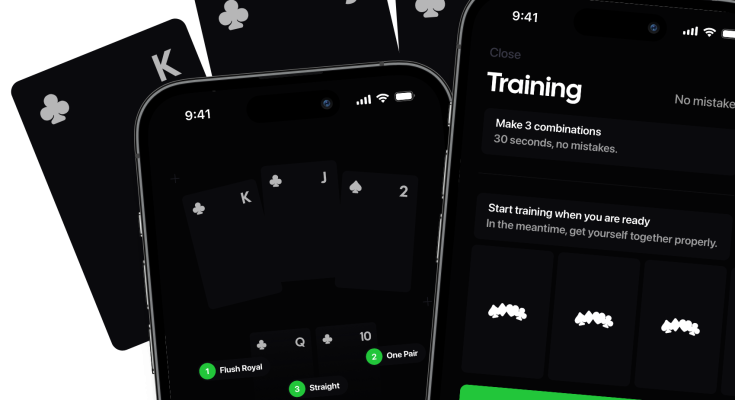

Let’s be honest — grinding poker alone at home can feel like shadowboxing. You’re throwing punches, sure, but is anything actually landing? That’s where solo poker drill systems come in. Pair them with a mobile training app, and suddenly your kitchen table becomes a legit dojo. No commute. No egos. Just you, your phone, and a structured plan to plug leaks.
In fact, the rise of mobile poker trainers has quietly changed how serious amateurs study. You don’t need a coach on retainer or a study group that flakes every Tuesday. You need a system. And your phone already lives in your pocket.
Why Solo Drilling Works (When It’s Actually Structured)
Randomly tapping through a quiz app is not a drill system. It’s a distraction. A real system has three parts: repetition, feedback, and progression. Miss one, and you’re just memorizing answers instead of building intuition.
Think of it like learning guitar. You don’t play a full song on day one. You drill chords. Then transitions. Then rhythm. Poker’s the same — preflop ranges, c-bet frequencies, river bluff spots. Each needs its own rep cycle.
Key takeaway: A drill without feedback is just guessing with extra steps.
What a Mobile Poker Drill System Should Include
Not every app deserves a spot in your routine. Here’s the deal — filter them hard. A solid mobile trainer should offer:
- Scenario-based reps — not just “what hand wins” trivia
- Instant equity or EV feedback — so you learn the “why”
- Spaced repetition — revisiting weak spots over days, not minutes
- Progress tracking — stats that expose your leaks, not just your streak
- Offline mode — because gym queues and subway rides happen
Honestly, the last one matters more than people admit. If your drill system dies without Wi-Fi, it’s not really mobile. It’s just… tethered.
Building Your Weekly Solo Drill Routine
Here’s a simple framework that fits real life. You don’t need four hours a day. You need consistency — twenty focused minutes beats a Sunday binge.
Monday / Wednesday / Friday: Preflop Range Drills
Fire up your app and run open-raising ranges for each position. Ten minutes. Then mix in three-bet and call-vs-three-bet spots. The goal? Recognition speed. You want to see A9s in the small blind and just know.
Tuesday / Thursday: Postflop Decision Reps
This is where most players bleed money. Drill c-bet spots on dry vs. wet boards. Then turn and river decisions. Use apps that show pot odds and equity side by side. It stings when you realize you’ve been calling too wide for months… but that sting is progress.
Weekend: Mixed Review + Leak Audit
Saturday or Sunday, open your stats. Which drill category has the lowest accuracy? That’s your leak. Spend thirty minutes there. No new material. Just repair work.
Popular Mobile Apps for Solo Poker Drilling
You’ve got options. Some are pure trainers, others blend solver output with quiz formats. Here’s a quick comparison to save you the download-and-delete dance.
| App Type | Best For | Typical Drill Style |
|---|---|---|
| Range trainers | Preflop memory | Tap charts, timed reps |
| Equity quiz apps | Hand vs. hand math | Multiple choice + EV reveal |
| Solver-lite trainers | Postflop lines | Scenario trees with feedback |
| Flashcard-style apps | Spaced repetition | Custom deck creation |
Sure, none of these replace a real solver session on desktop. But that’s not the point. The point is volume. Hundreds of micro-decisions a week, right from your couch.
Making Drills Stick: The Spaced Repetition Edge
Your brain forgets. That’s not a flaw — it’s a feature. Spaced repetition systems exploit it. You review a tricky spot today, then in two days, then in a week. Each time, recall gets a little sharper.
Some poker apps bake this in automatically. Others let you build custom decks. Either way, don’t skip it. Cramming river bluff-catch spots the night before a session is like chugging espresso before a marathon. Bad idea.
Common Mistakes in Solo Drill Systems
Even good systems go sideways. Watch for these traps:
- Drilling only what you’re good at. Feels nice. Teaches nothing.
- Ignoring the “why.” If you can’t explain the answer, you don’t own it.
- No session log. You’ll forget which spots wrecked you last week.
- Marathon sessions. Twenty focused minutes beats two distracted hours.
- Never testing under pressure. Add a timer occasionally. Real tables have clocks.
And hey — don’t beat yourself up over a bad drill day. I’ve had sessions where I missed the same three-bet pot four times in a row. Frustrating? Absolutely. But that repetition is exactly what makes it stick later.
Tracking Progress Without Lying to Yourself
Metrics matter, but only if they’re honest. “Accuracy percentage” can be gamed by drilling easy spots. Instead, track accuracy by category and response time. A slow correct answer is a yellow flag. A fast wrong answer is a red one.
Every two weeks, screenshot your stats. Compare. If preflop accuracy jumped from 71% to 88%, celebrate. If river decisions stayed flat, that’s your next focus block.
Where This All Leads
Solo drilling isn’t glamorous. There’s no rail, no applause, no bad beat story to tell later. But it compounds. Quietly. Like interest in an account you forget about.
The players who crush mid-stakes aren’t necessarily smarter. They’ve just seen the same spots so many times — on a phone, in a queue, on a lunch break — that the right click feels obvious. That’s the whole game. Turn confusion into recognition, one rep at a time. And your phone, well… it’s already in your hand.