

Let’s be honest—the world of mobile sports betting is incredibly convenient. With a few taps on your phone, you can place a wager from your couch, a coffee shop, or even the stadium parking lot. But what happens when you travel? That convenience gets tangled in a web of laws that change not just from country to country, but from state to state. It’s a legal maze, and navigating it requires a good map.
Here’s the deal: the legal framework for interstate mobile sports betting and its cross-border cousin is fragmented, evolving, and frankly, a bit of a headache. This isn’t just about where you can bet, but where you are when you do it. Let’s dive into this complex playing field.
The Foundation: It’s All About Location, Location, Location
Forget the old idea of “placing a bet in Vegas.” In the digital age, the bet is placed where you are physically located at the moment of wagering. This is the cornerstone of almost all mobile betting law. Sportsbooks use geolocation technology—a combination of GPS, Wi-Fi, and cell tower data—to pin your device to a specific, often shockingly precise, spot on the map.
If that spot isn’t inside a jurisdiction where betting is legal, the app won’t work. It’s that simple. This creates two main arenas of complexity: crossing state lines within the U.S., and crossing international borders.
The Interstate Tightrope: A State-by-State Patchwork
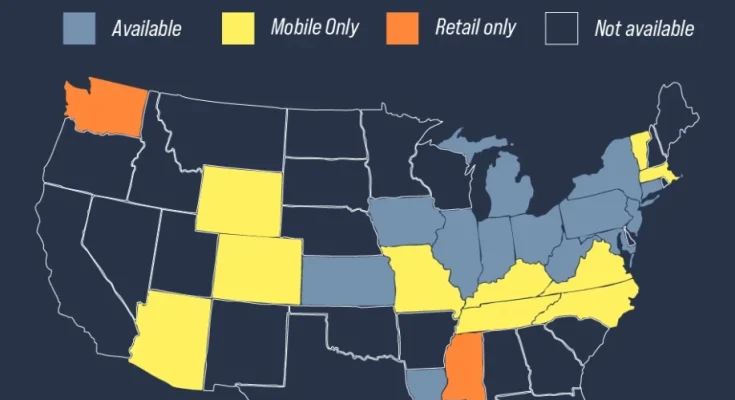
Since the repeal of PASPA in 2018, sports betting law has been a state issue. And states, well, they all have their own ideas. This patchwork creates specific challenges for the cross-border sports betting enthusiast.
Key Hurdles on the Road
- The “State Line Lock”: Drive from New Jersey (legal) into Pennsylvania (also legal), and your NJ sportsbook app will disable. You must be physically in NJ to bet on it. Even if both states have legal betting, you can’t carry your account across the border. It’s like your digital betting self hits an invisible wall.
- Multi-State Compacts (The Rare Exception): A few states have formed agreements to pool player liquidity for certain products, like poker. For sports betting, however, these are exceedingly rare. The most notable is the Multi-State Internet Gaming Agreement (MSIGA), but its application to sports betting is limited. So, for the most part, state borders are hard digital boundaries.
- Varied Tax Implications: Winning a bet in State A while you’re a resident of State B? You might have tax obligations in both. It’s a logistical snarl many bettors don’t think about until tax season arrives.
Cross-Border Betting: An International Labyrinth
Travel internationally, and the complexity multiplies. You’re dealing with not just different laws, but different currencies, languages, and regulatory philosophies. The risks get higher, too.
For instance, betting on a site licensed in the UK while you’re vacationing in Spain? Possibly okay, depending on EU frameworks and local Spanish law. But using that same UK account from a country where all gambling is prohibited? That’s a major risk, both for your account (which will be closed) and potentially for you legally.
Honestly, the safest rule is this: when you cross an international border, assume your betting apps are off-limits until you’ve done your homework. And I mean real homework—not just hoping the app will work.
The Technology Enforcer: How Geolocation Works (And Sometimes Doesn’t)
This entire system leans on geolocation tech. It’s sophisticated, but it’s not perfect. Ever been in a border town and your phone can’t decide which state you’re in? Betting apps have that same problem.
Common pain points include:
- Dense Urban Areas: Signal reflection off buildings can confuse the tech.
- Border Regions: Being near a state or national border can lead to “location jitter.”
- VPNs Are a Dead End: Any reputable sportsbook detects and blocks VPN usage immediately. Trying to spoof your location is a fast track to a banned account and forfeited funds.
What Operators and States Are Doing About It
There’s some movement to smooth the edges. Operators are pushing for “betting lounges” in airports located in legal states—a designated zone where you can place bets before your flight. And there’s ongoing, if slow, conversation about broader interstate agreements for mobile betting, similar to how lotteries sometimes work.
The trend, in fact, is toward more granular control. Some states are exploring “mobile betting zones” within counties or cities. It’s a far cry from the seamless, nationwide experience some users dream of.
A Practical Guide for the Mobile Bettor
So, what does this mean for you? How do you navigate this landscape without getting a penalty flag thrown on your account? Here’s a straightforward checklist.
| Scenario | Action to Take | Key Consideration |
| Traveling to a different U.S. state | Check the legal status of your destination. If legal, download a sportsbook licensed there after you arrive. | You will need to register a new account, with new verification. Your “home state” account is frozen. |
| Traveling internationally | Assume your apps won’t work. Research the local laws of your destination country exhaustively before attempting to log in. | Using an offshore bookmaker can carry significant legal and financial risk. Tread carefully. |
| Living near a state border | Be aware of “location drift.” Ensure your device’s location services are on and accurate before betting. | If you have constant geolocation failures, contact support. Your specific location might be problematic. |
| Returning home after a trip | You should be able to seamlessly resume using your local, licensed apps once geolocation confirms you’re back. | No need to re-download your “home” apps, but do ensure a stable internet connection for the location check. |
The Final Whistle: A Landscape in Motion
Look, the legal landscape for interstate and cross-border mobile wagering is like a river—constantly shifting, carving new paths. It’s built on a tension between consumer desire for seamless access and regulatory mandates for control and revenue capture.
For now, the burden of navigation falls on the user. The technology is the gatekeeper, and the law is the rulebook—a different one for every stadium you virtually enter. The future may hold more uniformity, perhaps driven by consumer pressure or the economic benefits of larger, shared markets. But until then, the most important skill for a mobile bettor isn’t picking winners; it’s understanding the map. Because in this game, knowing where you stand is the first, and most crucial, bet you place.