

You know that feeling. You’ve just finished a tough level, or maybe you’re customizing your character, and there it is—a shiny button offering a special crate, a bundle of gems, or a skin that’s just…perfect. That tap or click is instantaneous. But the psychological machinery whirring behind it? That’s anything but simple.
Let’s dive into the mechanics of modern gaming’s wallet. Why do we spend real money on digital goods? And what’s the deal with loot boxes, those digital grab bags that have sparked debates and even legislation? It’s a mix of neuroscience, behavioral economics, and plain old human nature.
The Pull of the Purchase: More Than Just a Transaction
At its core, an in-game purchase isn’t about buying a thing. It’s about buying a feeling. Game developers, often with the help of behavioral psychologists, design these systems to tap into fundamental human drives.
The Endowment Effect & Personal Investment
We value things more highly simply because we own them. In games, this starts the moment you create your avatar. That character becomes “yours.” Investing a few dollars in a cosmetic item for them feels like enhancing a part of your identity. It’s not just a sword; it’s your sword. This personal connection lowers our resistance to spending.
FOMO and Social Proof
Fear Of Missing Out is a powerful engine. Limited-time offers, battle passes that expire, or exclusive skins create a powerful sense of urgency. You see other players with that glowing armor or that dance emote—social proof in action—and the desire to belong, to also have that cool thing, kicks in. Honestly, it’s the same psychology behind flash sales in fashion, just digitized.
Loot Boxes: The Slot Machine in Your Pocket
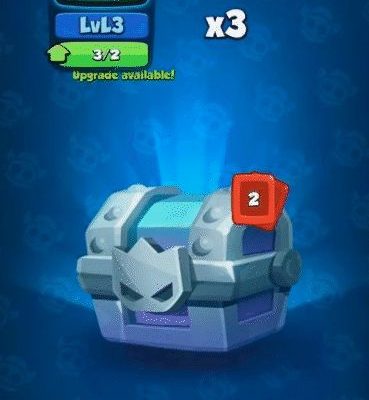
If standard microtransactions are a calculated purchase, loot boxes are a different beast. They’re the controversial heart of the conversation, often compared to gambling. And for good reason.
The Variable Ratio Reinforcement Schedule
This is the big one. It’s a term from B.F. Skinner’s operant conditioning experiments. In simple terms: rewards are given at unpredictable intervals. Pulling the lever on a slot machine uses this. So does opening a loot box. You don’t know if you’ll get a common item or that legendary, ultra-rare character.
That uncertainty is key. The brain’s dopamine system fires more intensely in anticipation of a potential reward than in receiving a predictable one. The “near miss”—getting a rare item but not the one you wanted—fuels the next purchase even more effectively than a win sometimes. It’s a potent loop.
Sunk Cost Fallacy and the “Just One More” Mentality
You’ve opened five boxes with no luck. You’ve already spent $10. The mind starts to reason, “I’ve invested this much, the big prize has to be soon.” That’s the sunk cost fallacy, tricking you into throwing good money after bad in hopes of justifying the initial spend. It turns a random chance into a perceived progression.
Design Tricks You Might Not Even Notice
The presentation is everything. Game UI is meticulously crafted to make spending feel seamless and, well, fun.
- Currency Conversion: Games rarely use direct dollar amounts. You buy 1,000 “Crystals.” A skin costs 800. This abstraction distances you from the real-world value. You’re not spending $5; you’re spending 800 Crystals.
- Juicy Feedback: The sound design and visuals for opening a loot box are pure sensory candy. Golden light, satisfying “shink” or “boom” sounds, dramatic reveals—it all heightens the emotional payoff.
- Convenience & Pain Points: Often, purchases are sold as solutions to friction. Grind for 10 hours for that upgrade, or get it now for $4.99. That shortcut is incredibly tempting when your playtime is limited.
The Impact and The Ethical Gray Area
This isn’t just academic. The psychological power of these systems has real-world consequences, especially for younger players or those predisposed to addictive behaviors. Regulators have taken notice.
| Region/Country | Regulatory Stance | Key Action |
| Belgium & The Netherlands | Loot boxes = gambling | Banned outright in some forms. |
| United Kingdom | Under review | Pushing for age ratings and clearer odds disclosure. |
| China | Mandatory disclosure | Law requires publishing exact item drop rates. |
The core ethical debate? Informed consent. When a system is designed to exploit cognitive biases, can a player, particularly a child, truly make a conscious choice? That’s the million-dollar question—literally.
Playing With Awareness: A New Kind of Skill
So, what’s a player to do? Banning fun isn’t the point. The goal is awareness. Think of it like nutritional labeling on food. Knowing what’s inside helps you make a better choice.
Here’s a quick mental checklist before you buy:
- Am I buying a specific item I wanted, or am I buying a chance?
- Have I set a hard budget for my gaming entertainment this month?
- Am I feeling frustrated or impatient in the game right now? (That’s when convenience offers hit hardest.)
Game design will continue to evolve. New monetization models will emerge. But the human brain? Its wiring changes slowly. The thrill of the chase, the desire to stand out, the fear of missing out—these are ancient drivers wearing digital clothes.
In the end, understanding the psychology isn’t about cynicism. It’s about reclaiming a bit of agency in a world designed to capture your attention—and sometimes, your wallet. It lets you appreciate the craft behind the game, while still deciding where your line is. Because the most rewarding unlockable, honestly, might just be your own awareness.